

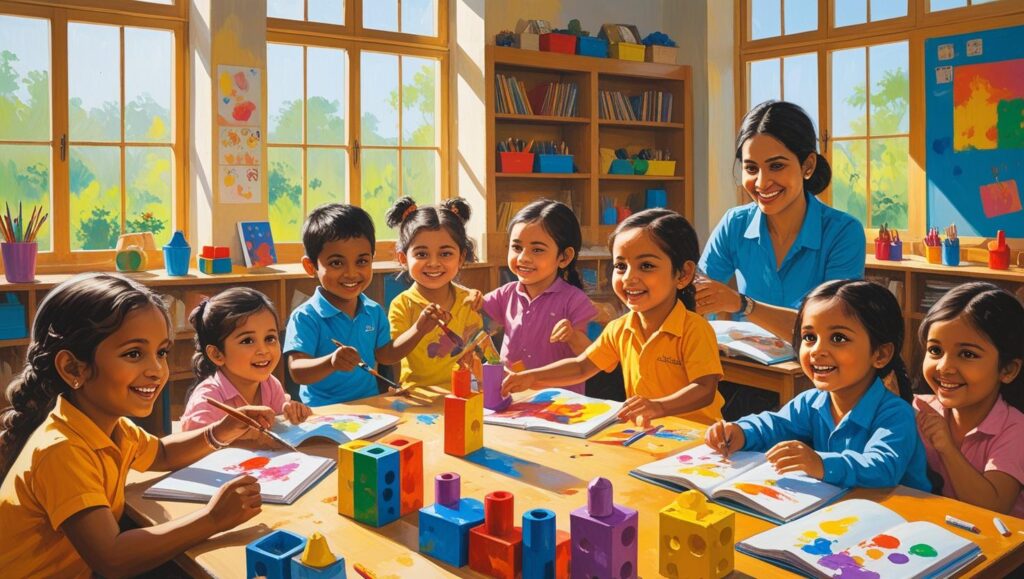
In today’s fast-paced, tech-driven world, the foundation of a child’s learning journey begins much earlier than most people realize. Early childhood education (ECE), typically referring to the period from birth to age 6, plays a crucial role in shaping a child’s cognitive, emotional, social, and physical development. Now, more than ever, parents and educators must understand the importance of quality early education and how it can significantly impact a child’s future.
1. Brain Development Happens Early
Research shows that 90% of a child’s brain develops before the age of 5. These formative years are a period of rapid neural connections. Quality early education during this phase enhances brain function, memory, attention span, and language skills. Activities like storytelling, music, puzzles, and guided play help stimulate critical thinking and creativity, which are building blocks for lifelong learning.
2. Laying the Foundation for Lifelong Learning
Early childhood programs introduce children to a structured learning environment, promoting curiosity and a love for learning. Concepts such as colors, shapes, numbers, and letters are introduced in engaging, play-based formats. More importantly, ECE helps children develop essential skills such as concentration, perseverance, listening, and communication. These are not just academic tools but life skills that pave the way for future academic and personal success.
3. Social and Emotional Growth
Preschool is often a child’s first experience interacting regularly with peers and adults outside their family. These early interactions teach children how to share, take turns, empathize, resolve conflicts, and work in teams. Emotional intelligence, which is a key predictor of future success, begins developing through these foundational social experiences. A quality preschool environment helps children build self-confidence and resilience.
4. Developing Routine and Independence
Children thrive in environments with consistency and structure. At preschools like Bliss Age, routines are thoughtfully designed to help children feel secure and confident. Simple routines—like packing a bag, tidying up toys, or washing hands before meals—help children develop a sense of independence and responsibility. These everyday actions gradually build executive functioning skills that are critical for managing tasks, time, and emotions later in life.
5. Detecting Developmental Delays Early
One of the key advantages of early childhood education is the opportunity to detect and address developmental delays or learning challenges early on. Teachers trained in early childhood development can identify issues in speech, motor skills, or social behavior and guide parents toward appropriate interventions. Early action ensures that children receive the support they need before these challenges affect later learning.
6. Equal Opportunity for Every Child
Access to early childhood education is one of the most effective ways to bridge social and economic gaps. When children from all backgrounds are given the same high-quality early education, the disparities in academic performance narrow significantly. In a diverse country like India, offering universal preschool access is key to creating a more equitable and educated society.
7. Building Parental Involvement and Awareness
Quality early childhood programs don’t just educate children—they empower parents. At Bliss Age, parents are seen as partners in education. Regular communication, parenting workshops, and involvement in school activities keep parents informed and engaged in their child’s development. This creates a supportive home environment that mirrors and reinforces the values taught at school.
8. Better Academic Performance in Later Years
Several studies have shown that children who attend quality preschools tend to perform better in primary and secondary school. They have higher reading and math scores, are more likely to stay in school longer, and have better behavioral outcomes. The strong foundation laid in early years pays dividends in academic achievement well into adulthood.
9. 21st Century Skills Start Early
We often talk about the importance of 21st-century skills like collaboration, creativity, communication, and critical thinking. But these skills don’t just develop in college or high school—they begin forming in preschool. At Bliss Age, our curriculum is designed to encourage exploration, teamwork, curiosity, and innovation from an early age.
10. Adaptability in a Rapidly Changing World
In an unpredictable world shaped by technology and global changes, adaptability is a vital skill. Children who are encouraged to think independently, solve problems, and express themselves creatively are more likely to succeed in such environments. Early childhood education fosters these abilities from the ground up, preparing children for both academic and real-world challenges.
Conclusion: The Bliss Age Commitment
At Bliss Age, we understand the immense responsibility and privilege of nurturing young minds. Our preschool in Burdwan is built on the belief that early childhood education is not just preparation for school, but preparation for life. Through a blend of structured learning, creative exploration, and emotional support, we provide an environment where children flourish.
In 2025 and beyond, investing in early childhood education is not a luxury—it is a necessity. Because when we nurture the youngest learners today, we shape the thinkers, leaders, and dreamers of tomorrow.
